
Patient-specific models, CRISPR editing, and automated reprogramming.
We engineer isogenic, patient-specific iPSC lines from diverse starting materials, including PBMCs, dermal fibroblasts, and urine-derived epithelial cells (UDEs), using our fully automated pipeline. Our capabilities extend beyond basic reprogramming to include precision CRISPR-mediated editing, offering full gene knockouts, homology-directed repair (HDR), prime editing, and transcriptional modulation (CRISPRa/i) to create exact disease models.
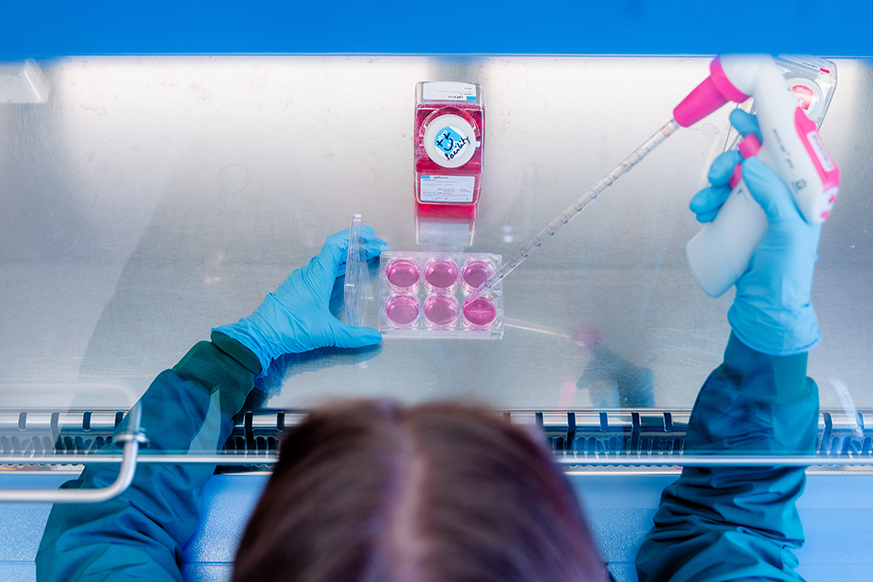
High-throughput generation with rigorous RNA-seq and scWGS screening.
Reporter gene tagging for real-time monitoring of gene expression and cellular states.
Creation of neurons, cardiomyocytes, brain organoids, intestinal stem cells, and more.
Investigating neurodegenerative disorders (Alzheimer's, Parkinson's) and rare genetic conditions.
Cardiotoxicity, hepatotoxicity, and general compound screening to de-risk drug candidates.
Genetic correction studies and validation of gene-editing strategies.
Our end-to-end iPSC pipeline — from sample to validated disease model.
Not sure your sample qualifies? Contact us to check →
We routinely produce neurons, cardiomyocytes, brain organoids, intestinal stem cells, and hepatocytes. We also develop custom differentiation protocols on request.
Every line undergoes RNA-seq-based karyotyping, pluripotency scoring, and mycoplasma testing at passage 10. We also offer optional scWGS for structural variant screening.
Tell us about your project and we'll scope a solution for your lab.
